| Entries |
| W |
|
Women's Trade Union League
|
|
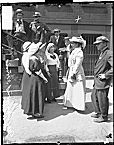
Under the leadership of Margaret Dreier Robins, an upper-class woman who devoted her professional life to the organization, the Chicago WTUL deepened its alliance with the Chicago Federation of Labor, promoted the leadership of working-class women, and played a key role in the 1910–11 garment workers' strike. In addition to providing food relief to strikers and their families through a system of commissaries, the WTUL helped draft the agreement ending the strike for workers at clothing manufacturer Hart, Shaffner & Marx, where women workers had sparked the citywide strike. The WTUL also played a role in efforts to organize domestic workers, office and department store workers, telephone operators, and women packinghouse workers.
Although the WTUL carried on until the 1950s, it became a less vital organizing force by the mid-1920s, especially after its national office moved from Chicago to Washington DC in 1929.
The Encyclopedia of Chicago © 2004 The Newberry Library. All Rights Reserved. Portions are copyrighted by other institutions and individuals. Additional information on copyright and permissions.