|
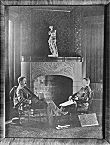
Burnham and Root, c.1890
|
This famous partnership was formed in 1873 by Daniel H. Burnham and John W. Root, two young men who had been working for the Chicago architects Carter, Drake & Wight. The new firm's first major commission came in 1874, when Root and Burnham designed a Prairie Avenue mansion for Chicago stockyards boss John B. Sherman. Over the next few decades, the firm designed dozens of large homes and commercial buildings in Chicago. Their 10-story Montauk Building, which went up in 1882, was the first of their contributions to the new field of skyscraper design. Among the partners' many contributions to the Chicago landscape were the Rookery; the original Art Institute; the Monadnock Building; the offices of the
Chicago Daily News, then the city's leading newspaper; and the Masonic Temple, which became Chicago's first 20-story building when it was completed in 1892. After Root died in 1891, the name of the firm became D. H. Burnham & Co. Burnham and his associates continued to design many notable Chicago buildings, including the Reliance Building; the offices of the city's two leading banks (First National and Commercial & Continental); a department store for Marshall Field & Co.; and the Field Museum, completed in 1920. Outside Chicago, major works of the Burnham firm included the Flatiron Building in New York City and Union Station in Washington DC. At the time of Burnham's death in 1912, the firm had nearly 200 employees, making it one of the largest architectural businesses in the United States.
This entry is part of the Encyclopedia's
Dictionary of Leading Chicago Businesses (1820-2000)
that was prepared by Mark R. Wilson, with additional contributions from Stephen R. Porter and Janice L. Reiff.
|